3 November 2026
Chair massage: what it is, how it works and why companies are offering it
 Written by Mireia Jurado
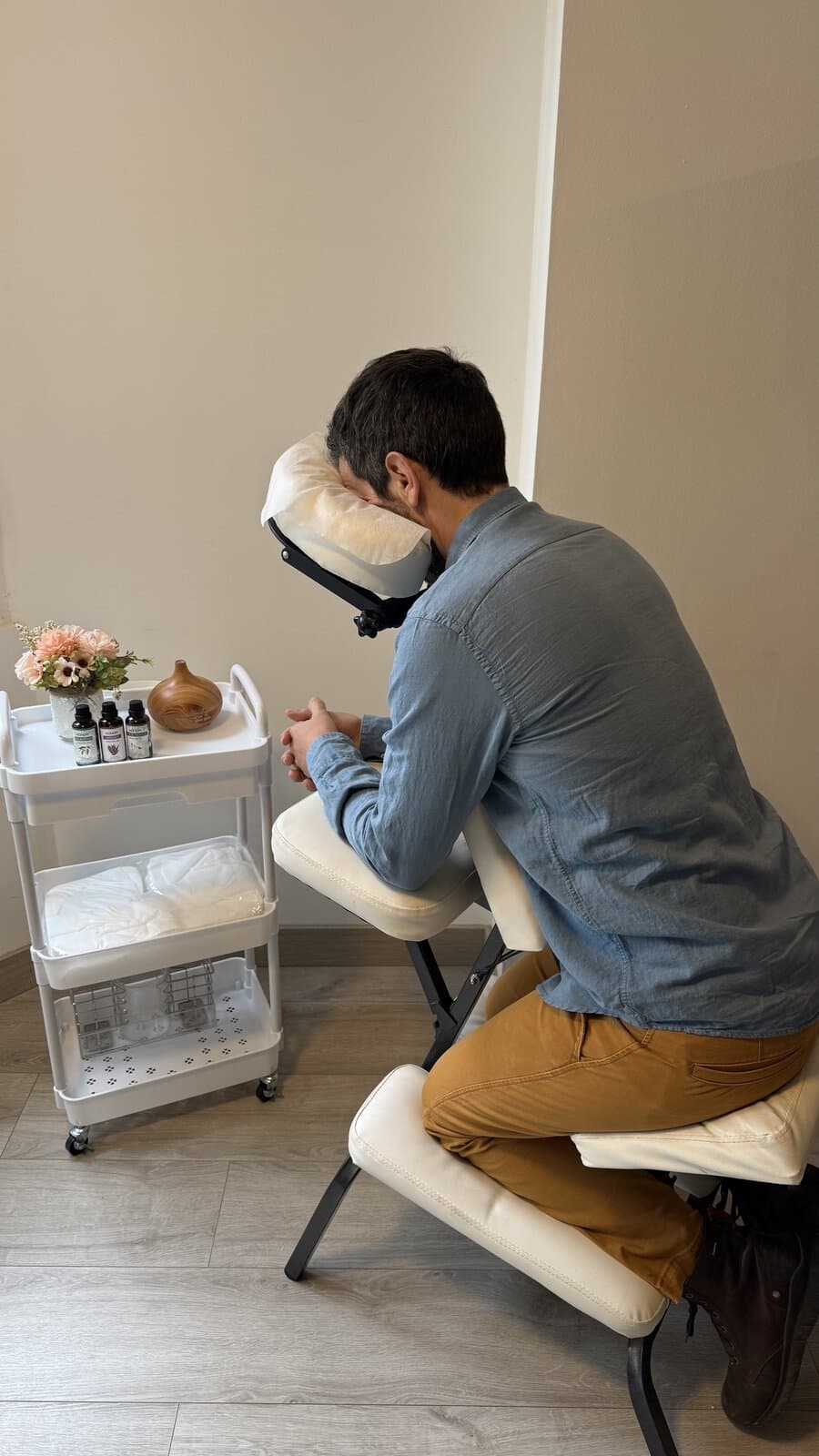
If you have ever seen an unusual chair with a face cradle in an office break room, you already know the star of this article. Chair massage is the format that achieved something that once seemed impossible: bringing a professional treatment into the workplace without interrupting the working day.
What exactly is it?
It is a short massage (we recommend 10-minute sessions, or 15) given on an ergonomic chair designed specifically for it. The person sits leaning forward, with their chest and face resting on padded supports, leaving the areas that suffer most from office work easily accessible: back, neck, shoulders and arms.
It originates from the Japanese Amma technique, adapted to the chair format in the 1980s precisely for corporate settings. Since then it has become one of the most common wellbeing formats in offices and at company events.
How does it work in practice?
The key to its success is what it does not need. No changing clothes: it is received fully clothed. No oils or creams, so there is no need to shower afterwards or worry about your shirt. No special room: a quiet corner of about 2 × 2 metres is enough. And it doesn't interrupt work: each person books their slot online and goes back to their desk afterwards.
The therapist works on the muscles with pressure, kneading and stretching techniques, adapting the intensity to each person. Ten minutes is enough to release a surprising amount of built-up tension.
Why companies are offering it
Long hours sitting down, screens and back-to-back meetings: tension in the neck, shoulders and back is a constant complaint in any office. Against that backdrop, chair massage offers something unusual in corporate wellbeing: a benefit that is tangible, immediate and for everyone.
Unlike fruit in the office or the meditation app nobody opens, a massage is felt in the body the same day. That is why it fits three common HR goals: improving team atmosphere with an initiative everyone values, reinforcing the message that the company cares about its people, and adding a preventive measure for musculoskeletal discomfort in line with health and safety objectives.
When it works best
It works as a one-off wellbeing day, as a recurring programme (weekly, fortnightly or monthly visits), as a thank-you after a busy period, or as a relaxation area at conferences and events. The investment is modest, around €16 per person (3 hours with 10-minute sessions), and you can start with a single 3-hour session to see how your team responds before planning a recurring programme.
Frequently asked questions
- How long is each session?
- At the office we recommend 10 minutes, with 15-minute sessions as an alternative. At events we use 5–7 minute express sessions to reach more people.
- How many people can one therapist see?
- About 15 people in 3 hours with 10-minute sessions, or about 10 with 15-minute sessions.
- What space do you need?
- A quiet area of about 2 × 2 metres per chair. A small meeting room is perfect.
- Is the service available in English?
- Yes. Bookings, communication and sessions can all be in English.
Want your team to try it? Start with a 3-hour session and see how it goes before deciding.
Civil liability insurance · Single-use materials · No-obligation quote